
Alex Davis’ Lay Lake Win Came Down to Seeing More, Moving Smarter and Staying One Step Ahead
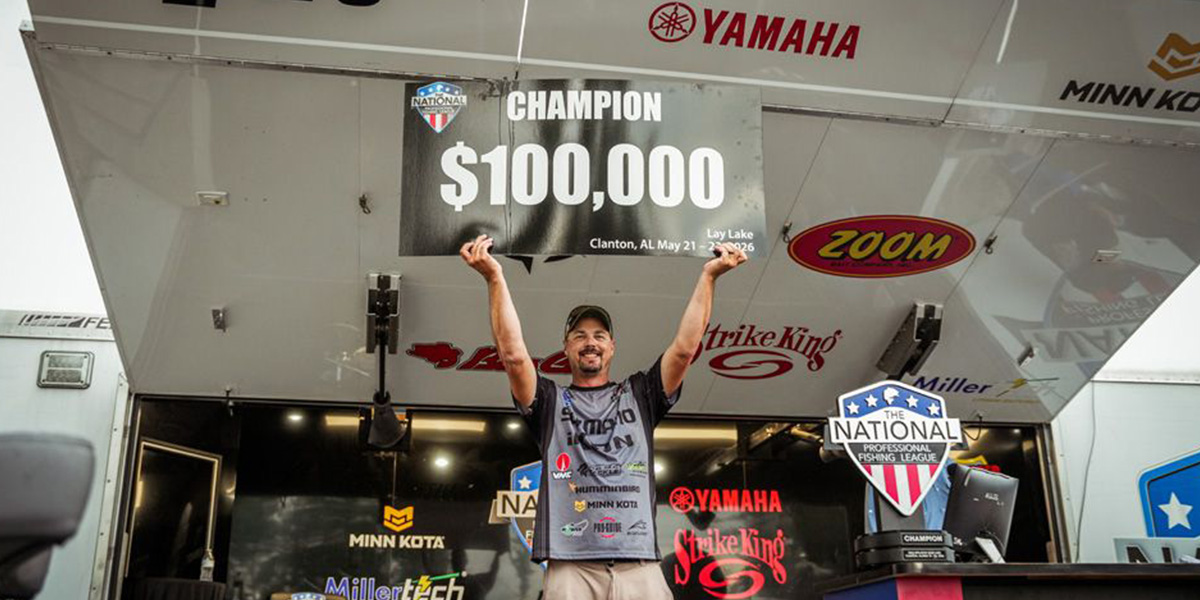
Coming into the Work Sharp National Professional Fishing League Stop 3 at Lay Lake, Alabama angler Alex Davis had no idea what kind of tournament the lake was going to give him.
The fish were in transition. Some were shallow, some were offshore and the weather shifted throughout the event. It was the kind of tournament where one pattern rarely holds up perfectly from practice through the final weight-in. To win, Davis would have to keep moving, keep adjusting and make the most of every productive piece of cover he could find.
Over three days, that's exactly what he did.
Davis weighed 19 pounds, 5 ounces on Day One, followed by 18-5 on Day Two and 14-0 on Day Three, finishing with 51-10 and earning the first major victory of his career. But the story of his win was not built around one magic spot or one single adjustment. It was built of efficiency, on finding subtle cover, managing hundreds of decisions and knowing when to expand instead of simply protecting what he already had.
Finding the Pattern
Early in practice, Davis found the shallow pattern that would eventually carry him through the event. Rather than running directly over productive water, he spent long days moving quietly down the bank, keeping a close eye on his MEGA 360 Imaging and using Humminbird LakeMaster mapping to study what was around him and marking anything that looked like it could hold fish.
"When I got home, I had 52.4 hours on my engine, and before the event I had 49.4," Davis said. "The rest of the time I was trolling on the Minn Kota Ultrex QUEST , moving down the bank and looking for whatever I could find. Rocks, grass, wood, bream beds, anything I could cast at."
The fish were positioned around isolated pieces of cover in extremely shallow water, which meant Davis had to be careful. In many situations, driving over the area to scan it would have risked disturbing the fish he was trying to catch.
"I generally like using MEGA Side Imaging on the Humminbird XPLORE to cover water, but in super shallow water I did not want to run over stuff with my boat," he explained. "So I cruised and used MEGA 360 to look around. I marked everything, and over 12-hour practice days and long tournament days, that's how I got around and figured out the most productive areas."
Fishing an urchin-style bait around shallow cover, Davis stayed mobile while slowly building a picture of the lake. Each piece of structure became part of a larger pattern he could return to as conditions changed.
Organizing the Chaos
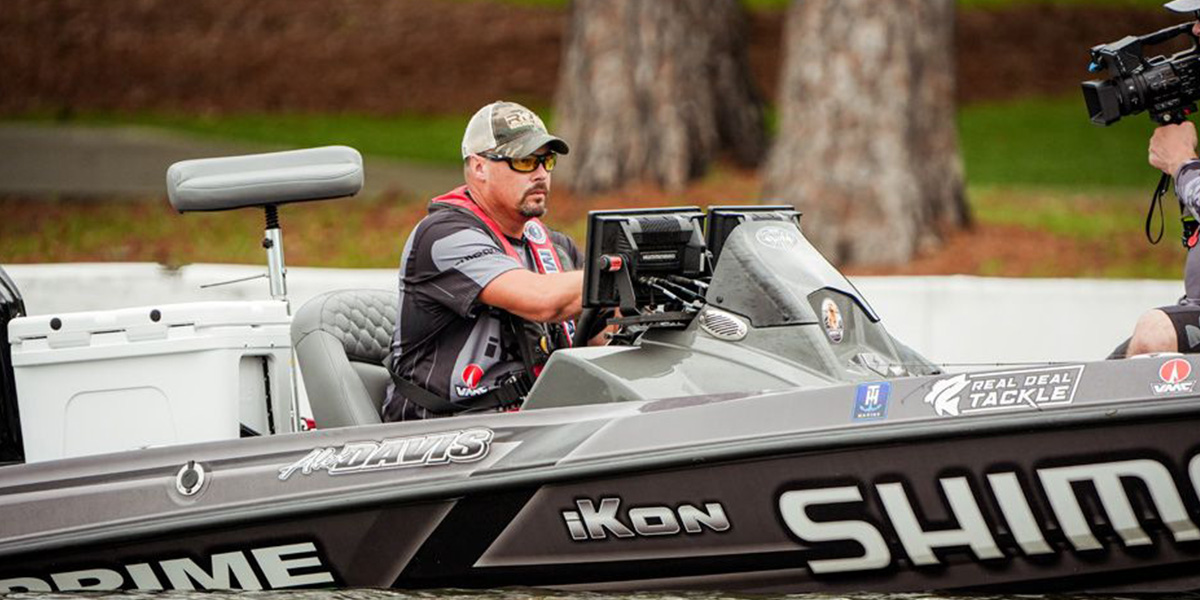
Photo: The National Professional Fishing League
As Davis broke down Lay Lake, one of the biggest challenges was not simply finding cover, it was keeping it all organized in a way that helped him make fast decisions during competition. "I have favorites set up just for this purpose," Davis said.
The distinction became important as the tournament unfolded. Davis marked boat-position waypoints differently than the cover he was fishing. He color-coded rocks, grass and wood so he could quickly see what he had found, where it was and how it fit into the day's developing pattern.
He continuously built a fresh collection of waypoints on his Humminbird XPLORE units. Using the updated interface and waypoint management system, he was able to quickly organize productive areas by cover type, helping him efficiently rotate through areas during competition. "It allowed me to figure out how the day was going and adjust to other productive areas and exact cover the fish where using," he said.
That organization helped him avoid getting locked into one area too early. Even after catching limits, Davis continued moving, scanning with MEGA 360 and adding to his rotation. With weights tight and quality bites difficult to come by, that decision gave him enough water to survive the final day.
"I think I caught two of my final-day fish on new stuff I found during the tournament," he said. "Being able to move around fast, mark waypoints on XPLORE, and label them using the favorites menu made me super efficient. I had the confidence to spend time during the tournament to expand and conserve my fish."
Boat Control When the Weather Changed
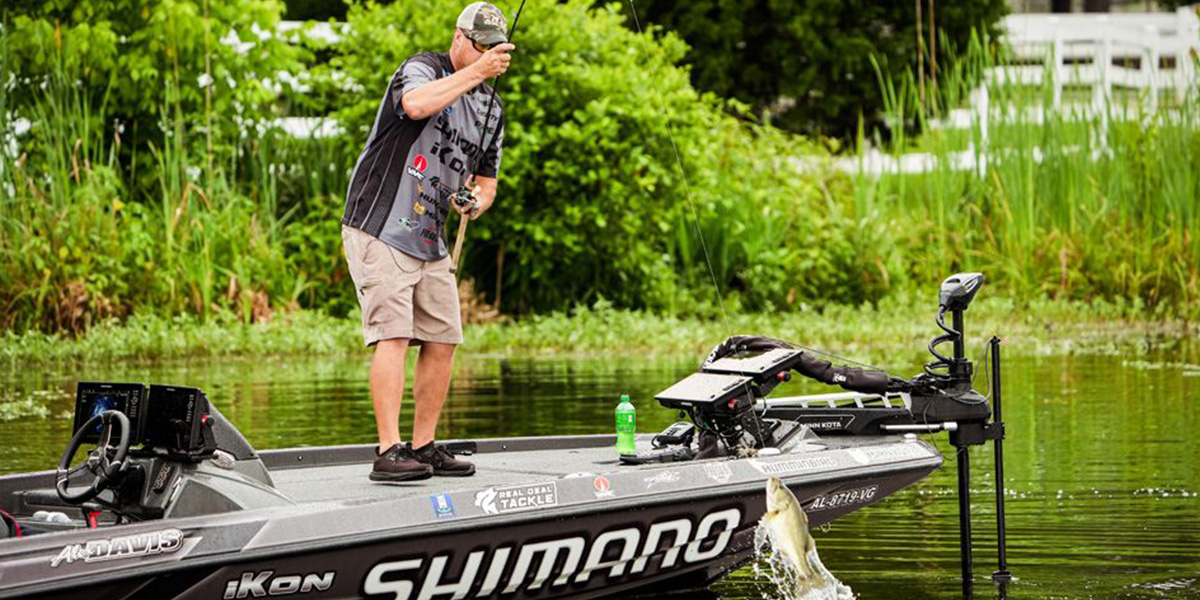
Photo: The National Professional Fishing League
Finding the right cover was only half the equation. Davis also had to put himself in position to make the right cast, especially as storms and wind moved through Lay Lake. Much of what he targeted was barely beneath the surface, sometimes in less than a foot and a half of water. Once he found a productive piece of cover, he needed to stop, line up and pick it apart without drifting past the sweet spot.
"Without forward-facing sonar and Humminbird MEGA Live 2 , it's hard to be efficient overall, but with 360 you actually get a better look around the boat," Davis explained. "I would drop the Minn Kota Raptors and position so I could line up the perfect cast with 360. It worked flawlessly. I already had my boat waypoints color-coded so I knew exactly where to be."
Davis' comfort with that approach did not happen overnight. Back home on Guntersville, he has spent years using 360 imaging in both tournaments and while guiding clients. That experience helped him interpret subtle details others might miss.
"I am super comfortable with it, and I have had 360 for over 10 years," he said. "I can see things I cannot see with live sonar like holes in the grass, little sweet spots, things like that. The combination of 360 and live is incredible, but in the NPFL, we cannot use forward-facing sonar, and 360 alone helped me seal the deal this week."
A Win Built on Efficiency
For Davis, the victory ultimately came down to adapting faster than the fish were changing. He found a shallow pattern, but he did not simply ride it out. He kept looking. He kept organizing. He kept expanding. And when the weather shifted or the bite slowed, he had enough information to make the next right move. That was the difference at Lay Lake. Not one cast. Not one waypoint. Not one stretch of bank. It was the ability to turn a scattered, shallow-water tournament into a manageable system, and then trust that system all the way to the final weigh-in.
What Davis Used
Throughout practice and competition, Davis relied on a connected boat system built around Minn Kota Ultrex QUEST, Humminbird XPLORE, LakeMaster Mapping, MEGA 360 Imaging, Minn Kota Raptors and the One-Boat Network App.
Together, the system helped him scan shallow cover without running over fish, mark and manage waypoints by cover type, hold position in wind and weather, and keep his tournament information organized both on and off the water.
As Davis put it, waypoint management was one of the biggest factors this week. "Some places had multiple pieces of cover, and being able to differentiate everything was important," he said. "Beyond that, saving waypoints to my phone with the One-Boat Network App or exporting them right to a card and getting them off my units is super easy."


